





Nicholaas Chiao: After Modern Art |
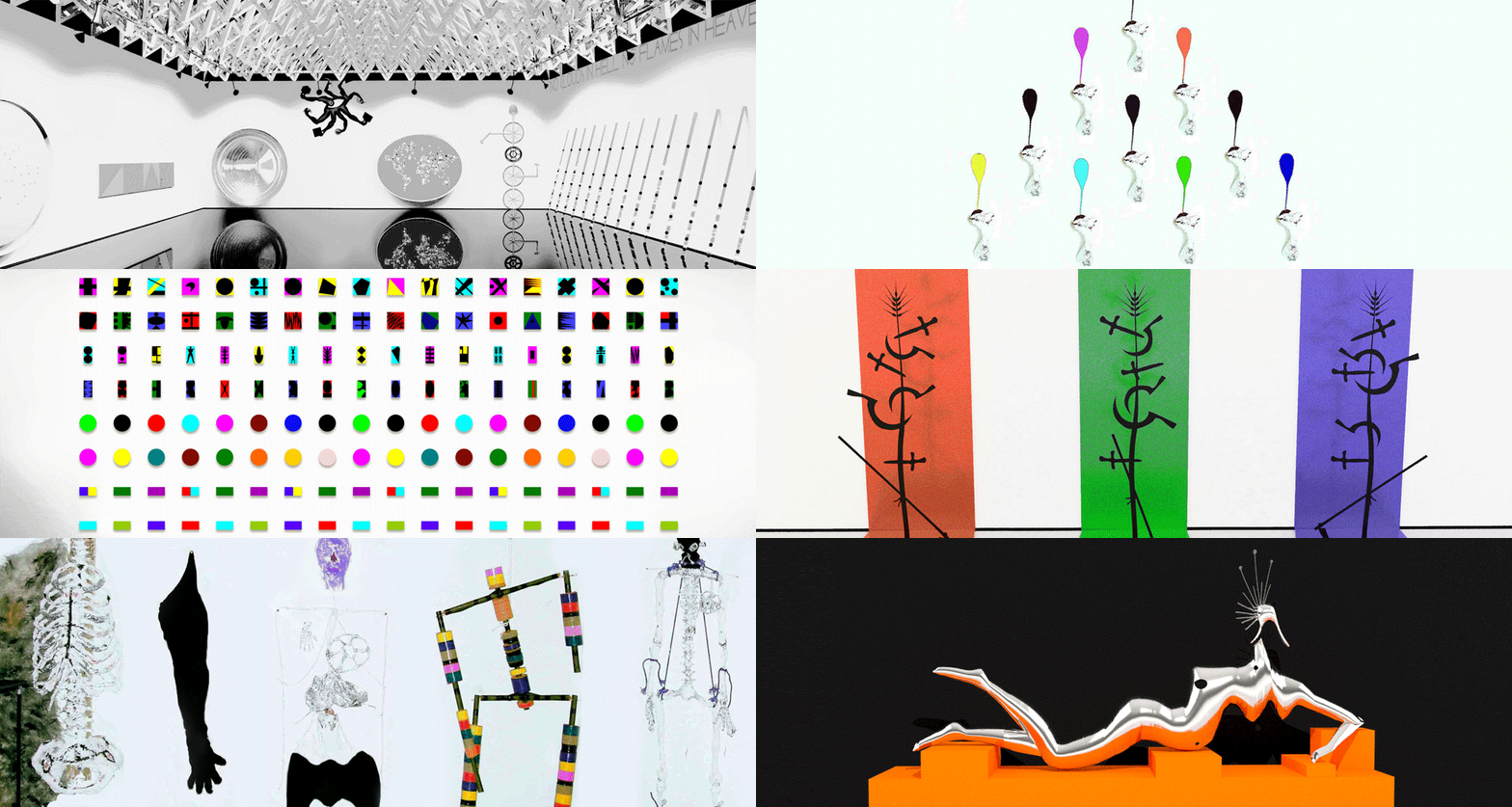
Selected Works of Art ━━━━━━ |




1
Nicholaas Chiao (also known as Nicholas Chistiakov, Nikolai Chistyakov, Nikolai Chystiakov, Nikolay, and Apolianorvs) was born in 1981 in Minsk, Belarus. In 2003, he immigrated to the United States after his father obtained a Green Card Lottery visa. In 2007, his solo exhibition "Time and Measures" at Behr-Thyssen Ltd in New York presented photorealistic depictions of museums and their visitors. That same year, he began collaborating with the Tallantyre Gallery in the United Kingdom. Since 2009, he has pursued more complex projects, employing diverse styles and media. He experienced psychiatric hospitalizations during this period as a result of loneliness and stress. From 2010 to 2020, he participated in group exhibitions with Mimi Ferzt Gallery and Krause Gallery in New York.
2
Artists's exhibitions:
The Affordable Art Fair, New York, 2006 with Behr Thyssen Ltd
Pavilion Art Fair, 2006, New York
Time and Measures, New York, Behr Thyssen ltd 2007
The Affordable Art Fair, New York, 2007 with Behr Thyssen Ltd
AAF London 2008 with Tallantyre Gallery, London, Great Britain
AAF London 2009 with Tallantyre Gallery, London, United Kingdom
AAF London 2010 with Tallantyre Gallery, London, Great Britain
AAF London 2011 with Tallantyre Gallery, London, Great Britain
AAF London 2012 with Tallantyre Gallery, London, United Kingdom
AAF London 2013 with Tallantyre Gallery, London, Great Britain
AAF London 2014 with Tallantyre Gallery, London, Great Britain
Scope Art Fair, 2015, NYC with Hendershot Gallery
Red, 2015, Group Exhibition, New York, Mimi Ferzt Gallery
Emerging to Established, 2015, Group Exhibition, New York, Krause Gallery
GLAAD Art Auction, New York, curated by Daneyal Mahmood
Cat Art Show LA, 2015, Los Angeles, produced by Susan Michaels
3
Contact:
info@nicholaaschiao.com
cell:+1-929-370-5524

Q: What is the most crucial thing in the age of Contemporary Art?
A. In the era of industrial-technological revolutions and the resulting overproduction of nearly all types of goods, the strength of the artist's brand becomes paramount. This prioritization of the artist's brand is not merely a matter of commercial recognition; rather, it reflects broader shifts in how cultural value and artistic authority are conferred within contemporary society. An artist’s capacity to remain responsive to viral social issues and actively engage with emergent technologies not only ensures visibility but also positions their work within ongoing societal discourses, thereby enhancing critical relevance. Although foundational art-making skills—such as composition, color theory, figure drawing, and technical proficiency—remain indispensable for credibility and depth, the pathways to prominence have diversified. While traditional avenues like galleries, biennials, museums, and established media outlets continue to play important roles, the rise of digital and social networks has democratized both exposure and audience interaction. These strategies collectively facilitate an artist’s ability to construct and communicate a distinctive personal narrative, making authenticity and reflective engagement as significant as technical mastery. Ultimately, success in the contemporary art landscape requires the artist to synthesize skill, technological savvy, and critical insight, simultaneously seeking excellence in artistic creation and informed participation in public discourses.
Q: What is most wrong about Contemporary Art?
A. Overproduction and declining quality are significant concerns. Oil paintings, for example, have been produced in vast quantities over centuries, leading museums to maintain storage facilities that far exceed their public exhibition spaces. With advances in technology, creating art has become increasingly accessible, leading to its mass production. Some artists now believe that traditional drawing skills are unnecessary, given the availability of photography, software, artificial intelligence, projectors, inkjet, and robotic printers. Many artists employ industrial methods, and a growing number of amateurs use AI generators without a foundation in art education. However, increased access and technological innovation have also democratized art-making, enabling a broader range of voices and creative experimentation. While this democratization can result in the proliferation of works that may lack technical rigor or conceptual depth, it also fosters new forms of artistic expression and expands public engagement with art. Consequently, the art world faces both the challenge of maintaining high standards and the opportunity to cultivate greater inclusivity and diversity.
Q: How can Nicholaas Chiao's Art be briefly described?
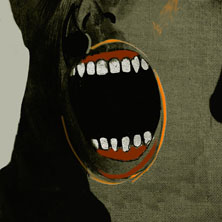
A: Nicholaas Chiao's artworks reflect the realities of life and the experiences accumulated over years spent in Belarus and the United States. These works serve as artistic expressions of autobiography. They are at times revealing or provocative, yet consistently strive for aesthetic shock or inherent beauty.
Q: Some of the artworks we see here are provocative. How can an artist get people to accept these ideas? Why does one need to disturb people?
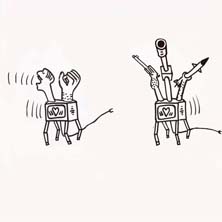
A: Nicholaas Chiao produces many works that are controversial or provocative, often addressing unsettling themes such as terror, suicide, politics, insanity, medicine, and ethics. These subjects frequently mirror those presented by news agencies, making them familiar to the public. Acceptance of such works as art cannot be compelled; rather, the artist's role is to provide context and explanation, enabling viewers to consider these issues from the artist's perspective. The most profound art reflects the complexity of life itself, and Chiao's work is seen as a powerful representation of this complexity. As an artist, he often depicts thought-provoking tragedies while consistently incorporating optimistic colors and dynamic compositions to instill certain hope even in the obvious horror.
Q: Why does Nicholaas Chiao have so many styles in his work?
A: It is reasonable to ask why an artist would employ multiple styles in their work. Chiao's photo-based paintings vividly depict the physical world, while his deconstructivist and other approaches explore the abstract dimensions of the soul and personal experience. Given the complexity of life, Nicholaas Chiao's art responds to the pluralism inherent in contemporary culture. Additionally, working in a single style would become monotonous for both the artist and the audience.
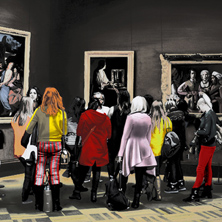
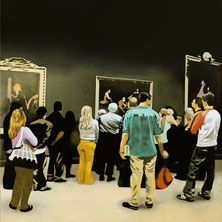
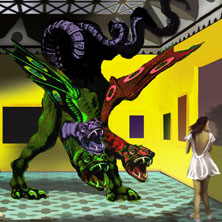
Q: Besides conceptual and deconstructivist oeuvres, Nicholaas Chiao produces a lot of photo-based paintings, mainly of museum interiors. Tell us more about these paintings.
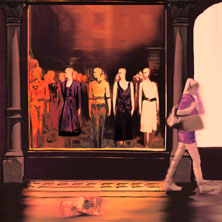
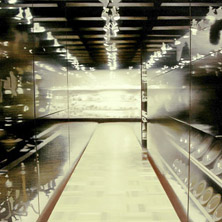
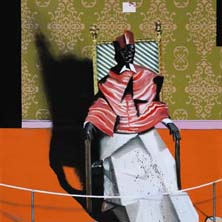
A: The prevalence of museum imagery in my work is largely due to consistent demand from art collectors. Paintings depicting museums with visitors symbolize authority within the art world and serve as metaphors for human life. Themes such as birth, aging, and death are metaphorically present in the artworks displayed in museum galleries, and the visitors themselves represent a range of ages. Additionally, museum scenes are visually rich and offer complex narratives, making them compelling subjects for painting.
Q: How does Nicholaas Chiao explain works such as The Thousand Years and The Midday Suicide?
A: 'The Thousand Years' is a sculpture consisting of a single drop of semen on a glass square, directly referencing Damien Hirst's renowned installation, which features a vitrine containing a cow's head and flies. By reducing the artwork to a singular biological element, Chiao offers a theoretical reflection on the longevity and continuity inherent in human reproduction, contrasting this minimalist gesture with Hirst's complex engagement with life, death, and decay. The piece can be interpreted as a critical commentary on the transmission of genetic and existential material through time, interrogating the spectacle and materiality often associated with contemporary conceptual art. 'The Midday Suicide' is a tragic artwork depicting the collapse of a young woman against a candy-colored background. The uncertainty surrounding the cause of her suicide—potentially unrequited love, excessive heat, hormonal imbalance, or an accident—evokes the multiplicity of factors shaping human experience. This ambiguity aligns the piece with broader theoretical concerns in contemporary art about subjectivity, existential crisis, and the aesthetics of tragedy, rendering it an iconic representation of the complexities and controversies of modern life.
Q: What will be the Art of the next century?
A: The art of the next century will likely resemble contemporary art, reflecting the affluent lifestyles and values of the future. At its best, it may synthesize insights from intelligence agencies, art, science, technology, and psychiatry, enabling new and intellectually rich perspectives on life. Artists will continue to experiment with color, form, media, composition, philosophical ethics, and aesthetics, combining these elements in increasingly diverse ways. By 2030, AI-driven robot painters may compete with human artists, even prevail over humans at auctions. By 2040, the proliferation of AI-generated images could result in an overwhelming abundance of art, potentially rendering traditional art history obsolete. Nonetheless, some theorists, such as Claire Bishop and Marcus du Sautoy, have argued that AI-generated works may lack the intentionality and critical engagement that characterize significant human-created art, thereby risking further commodification or the repetition of existing forms. Conversely, others see AI as a tool that could democratize creative production and foster genuinely new aesthetic paradigms, akin to how photography and video once transformed artistic practice (Elgammal et al., 2017). Nicholaas Chiao's principal project, 'The Idols of Niertismus,' is regarded as the last historically significant work of art. After 2040, as AI robots assume most human occupations, society may shift toward immersive virtual realities, with individuals creating their own unique art histories.
Q: What influences Nicholaas Chiao?
A: Life, literature, music. He likes music. His musical influences range from Richard Wagner and Bach to Depeche Mode, Lily Allen, Led Zeppelin, and The Doors, each contributing distinct moods that he incorporates into his art. In literature, he cites 'The Stranger' by Albert Camus, as well as the works of Friedrich Nietzsche, the Bible, the Torah, and Sigmund Freud. Cinematic influences include films by Ingmar Bergman, Quentin Tarantino, and David Lynch, as well as biographical films about artists, such as Julian Schnabel's 'Basquiat.' Science and technology also play a significant role in shaping his artistic vision.
Q: Politics and Art, enemies or friends?
A: Historically, art was patronized by the Church, aristocrats, and royalty. In contemporary contexts, it similarly serves governmental purposes, contributing to presidential prestige, economic objectives, patriotic propaganda, education, luxury, and even so-called Potemkin villages. The narrative of art history today is largely constructed by governments, technocratic corporate authorities, and art institutions, rather than by artists themselves; only the most eminent artists actively shape this history. As a result, contemporary art is unlikely to yield significant financial returns unless it captures the interest of individuals with political or economic power. In this environment, leveraging educational networks and cultivating strategic relationships within the art world are critical for gaining recognition and support.
Q: The war and terror themes seem important for Chiao; why?
A: Nicholaas Chiao acknowledges the importance of documenting war and terror as historical precedents and examining their impacts. He strives to approach these subjects with respect, sensitivity, and honesty, aiming to achieve a form of sacred beauty. Chiao aspires to create a lasting record of tragedies, hoping that such events will not recur. He is mindful not to overproduce works centered on global catastrophes, recognizing that, at times, ethical considerations may call for restraint or silence.
Q: What is Nicholaas Chiao's opinion about Art as a business practice?
A: Art becomes a viable business only when an artist establishes an instantly recognizable and reputable brand. Otherwise, creating art is primarily an investment of time in producing works that are personally, not historically significant. Typically, only after years of dedicated practice do artists attain the philosophical depth and technical mastery necessary for commercial success.
Q: What does Nicholaas Chiao think people expect to receive from the experience of Art?
A: The experience of art has always been profound, engaging both the senses and the spirit. Art can occasionally serve as a substitute for travel, offering new perspectives and experiences. While time and technology alter artistic forms and media, the underlying messages of hope persist. Viewers gain new ideas, inspiration, varied emotional responses, and a desire to engage with artists and life itself. Ultimately, art offers opportunities to encounter the novel, stimulate the senses and intellect, and evoke memories of one's deepest affections.
Q: Who among twentieth and twenty-first-century artists is most important to Chiao?
A: It is impossible to offer a definitive judgment regarding the most important artists, as such conclusions are unattainable in art. The cultural value of art or artists can only be assessed through their measurable social impact. According to Nicholaas Chiao, notable figures include Gustav Klimt, Egon Schiele, Max Beckmann, Kazimir Malevich, Arshile Gorky, Yves Tanguy, Piet Mondrian, Joan Miró, Pablo Picasso, Francis Bacon, Keith Haring, and many others. Contemporary artists such as Damien Hirst, Maurizio Cattelan, Eric Fischl, Gerhard Richter, Takashi Murakami, Pipilotti Rist, and Peter Doig also warrant mention. While many may achieve brief fame or create exceptional works, only a select few possess the capacity to make a lasting historical impact over centuries.
Q: What does Nicholaas Chiao think about Charles Saatchi? Did his speculations create or inflate the value of contemporary Art?
A: The art market is shaped by trends, influential artists, and trendsetters, with collectors at various levels seeking exclusive, coveted, and socially validated works. It is notable that many wealthy individuals are personally acquainted, as exemplified by Warren Buffett's connections within the Forbes Top 100. The criteria for art's acceptance among the elite are well established, and preferences for specific artists fluctuate over time. During his active years, Charles Saatchi wielded an influence in the art market comparable to Warren Buffett's in finance, serving as a prominent collector and media figure. His contemporary art collection rivals those of major institutions such as Tate and MoMA. Chiao expresses sympathy for Saatchi's efforts in promoting artists like Damien Hirst and the Young British Artists. Speculation in the market can drive prices upward, but the global contemporary art market is inherently volatile, with potential for downturns and the devaluation of overhyped or low-quality works. By 2040, the proliferation of AI-generated art and robot painters may saturate the market, potentially diminishing the historical value of contemporary works and leaving only older pieces as the most valuable collectibles.
Q: How many artists could make a living from Art?
A: Many famous artists, as well as some emerging ones, are able to make a living if they receive fellowships and grants, benefit from support by social networking corporate technocrats, or are represented by reputable art dealers. In the Internet Era, many artists obtain government, business, and private commissions and can sell their work online directly to clients without relying on dealers or traditional gallery representation. For example, the artist Beeple (Mike Winkelmann) exemplifies this shift: by leveraging digital platforms and social networks, he successfully auctioned his digital art at Christie’s for $69 million in 2021, despite having no prior gallery representation. This case highlights how contemporary artists can achieve significant commercial success through alternative and technologically mediated channels.
Q: Whom, if anyone, should one listen to for some advice while acquiring Art?
A: Engage directly with the art-making process, and immerse yourself in the broader art world by subscribing to art magazines and participating in online art communities. Attend MFA thesis exhibitions and consult with Art Advisors and Gallerists. Visit Art Museums regularly. When selecting art, choose works by artists who genuinely inspire you and, if possible, whose work you find superior to your own creations. Trust your individual needs, emotions, and judgment in this process, much as you would when selecting a partner. Art should provide daily comfort and personal resonance. Begin your collection with accessible items such as affordable prints, posters, catalogs, books, and preliminary studies or autographs. Before making significant investments, become familiar with the History of Art. Nicholaas Chiao, for example, maintains an extensive library of historical and contemporary art and appreciates a wide range of artists stretching from ancient Egyptian works to cave paintings. If you intend to gain financially from art purchases, exercise caution, as the art world is fundamentally philanthropic. While some people treat art as an investment, akin to trading stocks, and may see profits, successful investment depends on broader market dynamics. Consider carefully whether there is sustained demand for works by a particular artist, or if there is a lengthy waiting list of collectors, as ultimately, marketing often plays a greater role than personal enjoyment.
Q: What is philanthropy in Art?
A: Many masterpieces would not exist without the support of philanthropic patrons, as exemplified by the Medici family and Vatican commissions. For these patrons, philanthropy provided not only the satisfaction of supporting the arts but also significant prestige, influence, and access to luxury.
Q: Should Art be popular?
A: Art should indeed be popular and widely accepted. Mass media and education play crucial roles in promoting art, and every school should offer art lessons. While art already enjoys significant popularity, further outreach can be achieved through specialized art education in schools, colleges, and universities, as well as through professional use of social media. Street artists such as Banksy, Kaws, and Invader effectively attract public attention by creating works in prominent public spaces.
Q: Are paintings a better investment than sharks in formaldehyde or bananas on the wall? Diego Velázquez's canvases still look terrific after 400 years, and they are much easier to keep unrotten.
A: Art constitutes an investment only when its appeal and demand are enduring. Unlike transient trends, science remains constant. Most historical masterpieces transcend fashion, serving as timeless records of history, society, and governmental prestige. Preservation is a critical consideration, and, with proper care, even unconventional works such as preserved sharks can be maintained. Yet the popularity of these works may disappear in favor of more skillful, complex, and time-relevant pieces. Even Valasquez can be shadowed by new masters and the power of AI. Because we are humans on the way to higher intelligence and stronger performance. In the future, we will replace older icons with new ones. Moreover, investing and money could become less important in the world of lightning-fast AI and superabilities, as fully robotised AI-run factories can manufacture any object upon receiving a full description of the required item(s).
In the information age, I argue that continual repetition of an image by media outlets plays a central role in shaping both the perceived significance of the image and the viewer’s engagement with it.
However, the repetition of art by media outlets does not inherently enhance its quality. Instead, such repetition increases its perceived importance to the audience.
Contemporary art continues to emphasize skilled drawing, innovative composition, and, primarily, striking and harmoniously balanced color. Additionally, artists often engage with notions of authority, drawing upon instincts, addictions, and audience beliefs.
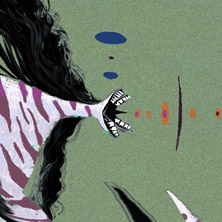
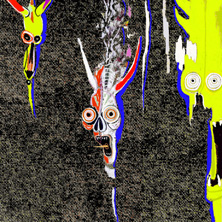
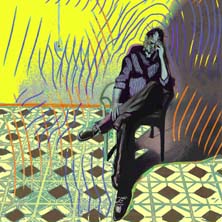
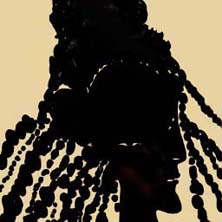
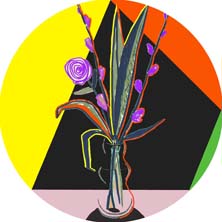
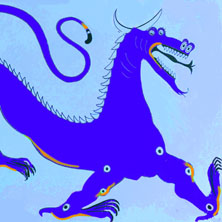
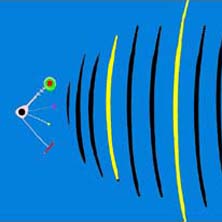
Nicholaas Chiao employs a variety of styles, asserting that life is too complex to be represented by a single artistic approach.
In his work, the artist pursues not only beauty but also alternative measures of significance, such as the fame of a portrait's subject, the importance of an object, event, or place, or the distinctiveness of the work's style.
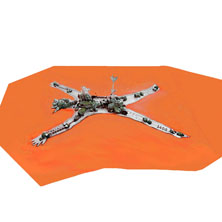
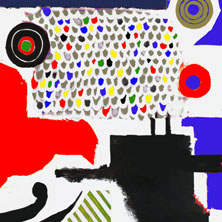
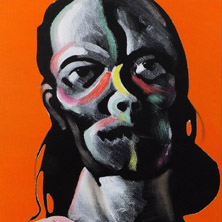
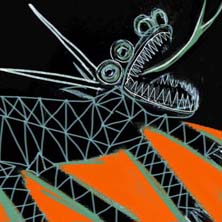
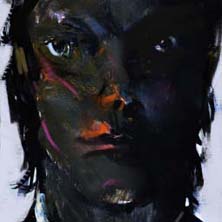
Chiao's first commercially successful project, "Museum Paintings," involved utilizing the authority of museum settings in figurative scenes to create works highly sought after by collectors. Subsequently, he introduced a style termed deconstructivism, which combined elements of cubism and abstract expressionism to achieve memorable results through unconventional approaches to form.
The fear of death and endings is common, yet every conclusion gives rise to new beginnings. This cyclical nature of significance and renewal aligns with my thesis that ongoing repetition and mediation shape the perceived importance of images in contemporary culture. Theoretical frameworks guide the interpretation and application of art, providing a lens through which such repeated imagery is evaluated and understood. Paintings, drawings, installations, and sculptures represent an infinite array of exceptional and diverse forms. The criteria for importance among these works may include promotion by museums and media, aesthetic appeal, high market value, historical significance, or a clearly articulated rationale for their relevance, reinforcing how media repetition elevates their status. Chiao's medical series exemplifies this complexity. Drawing on Warhol's design strategies and Hirst's provocative impact, Chiao developed the "Last Judgment" series. These works serve as vivid reminders of the potential to synthesize the human body and sustain cellular and tissue life. Although some pieces were lost, the series explores themes such as the end of nature, the triumph of science, and the conquest of death, possibly referencing the Biblical Last Judgment and the resurrection of the dead. This narrative also suggests the end of human history and the emergence of the Übermensch, envisioning a path for the ultimate genius beyond Homo sapiens.
Copyright © 2025 Nicholaas Chiao, All Rights Reserved.